Reducing Dementia Risk and Reducing Alcohol Intake
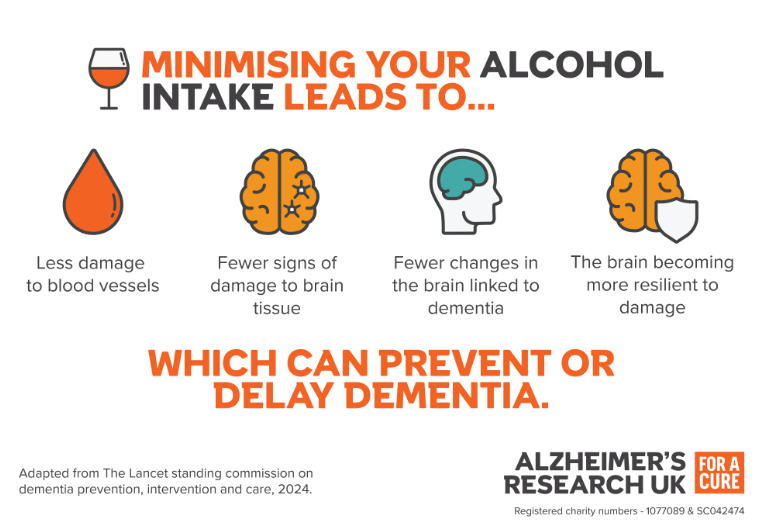
Research has suggested that the number of dementia cases globally could be reduced by almost half through managing the 14 identified risk factors and early intervention. When it comes to reducing alcohol intake, the number of individuals diagnosed with dementia would be 1 fewer in every 100 people.
Aside from looking after our brain health, there are a number of additional health benefits to reducing how much alcohol we drink, including your heart, mind and liver.
There are a number of different ways we can all reduce and manage our alcohol intake. From support within West Glamorgan, or hints and tips to adopt in everyday life, it’s never too early and never too late to start thinking about your brain health.
Alcohol and the Brain
Regular heavy drinking can be linked to an increased risk of developing dementia, especially in middle and later life (between 40-50).
Chronic alcohol misuse can damage brain cells, shrink brain tissue, and lead to conditions like Alcohol-Related Brain Damage (ARBD), a brain disorder which covers several different conditions including Wernicke-Korsakoff syndrome and alcohol-related dementia.
Alcohol Related Brain Damage (ARBD) isn’t one condition — it’s a group of disorders caused by long-term alcohol misuse. The most well-known form is Korsakoff syndrome, often described as an alcohol-related type of dementia.
Symptoms can include:
- Memory loss (especially forming new memories)
- Confusion and disorientation
- Poor decision-making
- Personality changes
Unlike many types of dementia, ARBD can be prevented and, in some cases, partially reversed — especially if treated early and alcohol is stopped. Untreated ARBD can lead to an increased risk of developing dementia later in life
Newid – Your source of support in West Glamorgan
Newid is a one stop service for support available within West Glamorgan providing support surrounding drug and alcohol use. Offering personalised advice, Newid works in partnership with Swansea Bay University Health Board, PSALT, Dyfodol, Barod, Adferiad, and Plattform. You can either self-refer to this service, or someone can do this on your behalf.
If you or someone you know would like support with alcohol use, you can get in touch with Newid following this link: https://www.newidcymru.co.uk/accessing-newid/
You can also get in touch with your GP, who can provide information and support if discussing alcohol intake could be difficult.
Reducing your alcohol intake
Stopping or drinking less alcohol can make a big difference to your health. Drinking less is one of the steps you can take to protect your brain health long-term. Although there is no “safe” amount of alcohol to drink, it’s recommended to drink no more than 14 units of alcohol a week, spread across 3 days or more.
Tools such as Alcohol Change UK’s Unit Calculator can help you figure out if you are staying within this range: Unit calculator | Alcohol Change UK
Some hints and tips to help reduce alcohol intake include
- Switching to a lower ABV percentage option, this could include low alcohol or alcohol-free options.
- Measure your drinks, this will help keep track of how much you are drinking and allow you to stick within your limits
- Try 2-3 days a week with no alcohol, it may help to make plans that don’t involve drinking
- Stay hydrated, make sure to drink plenty of water between alcoholic beverages
Remember, you can always ask for help if you need it. Your GP can signpost to community services who provide support, support groups and counselling.
Brain Health Booklet
Want to learn more about looking after your brain health? For more information steps you can take, and for local information and support in making these lifestyle changes you can access the Brain Health booklet in English and Welsh through our website.
You’re Not Alone
Remember, you are not alone. If you have concerns about your memory, care for someone with dementia or are looking for additional information and advice the Dementia Hwb is here for you. Visit our Swansea or Aberafan Dementia Hwb or pop down to one of our Mobile Hwb’s near you. Can’t make it in person? You can call our Swansea Hwb on 01792 304519 and our Neath Port Talbot Hwb on 01639 374356 or email on Support@DementiaFriendlySwansea.org and one of our team will respond by the next working day.
Article by Kayleigh Phillips