Reducing Dementia Risk and Eye Health
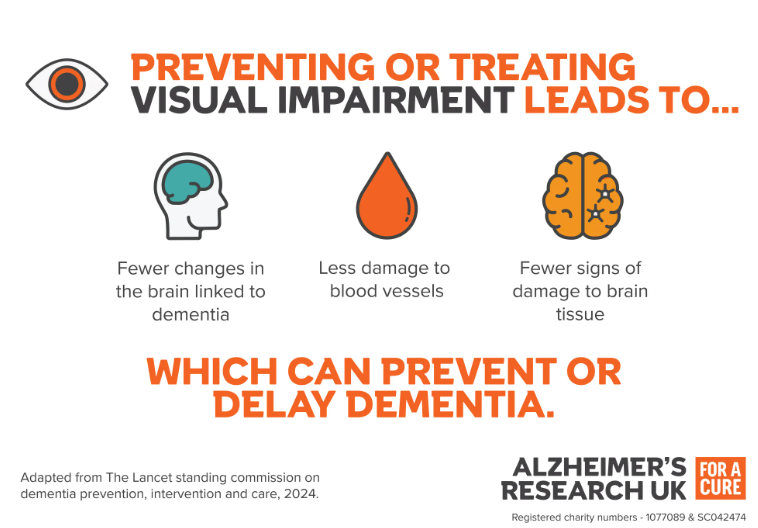
Research has suggested that the number of dementia cases globally could be reduced by almost half through managing the 14 identified risk factors and early intervention. When it comes to taking care of our vision, the number of individuals diagnosed with dementia would be 2 fewer in every 100 people.
Aside from looking after our brain health, there are a number of additional health benefits to regular eye examinations and taking care of our visual health. Early detection of visual impairments, cataracts, glaucoma and diabetic retinopathy can all be associated with an increased risk of dementia in the future.
From support within West Glamorgan, or hints and tips to adopt in everyday life, it’s never too early and never too late to start thinking about your brain health.
Vision and the Brain
Sight loss can be linked to dementia and treatment of some eye conditions may lower your risk of dementia. Sight loss can also make diagnosing dementia more difficult, and a person may struggle with parts of the test as a result. Sometimes, it can be hard to determine whether a person is living with dementia or sight loss due to one condition masking the other.
Posterior Cortical Atrophy (PCA) is a form of dementia that directly impacts the visual cortex in the brain. This is the part of our brains that deal with the information coming into the brain from our eyes.
Symptoms can include:
- Difficulty recognising faces, objects and pictures
- Difficulty in judging distance
- Having problems with spatial awareness
Visual disturbances can also be seen in various different dementias, such as Alzheimer’s Disease, Vascular Dementia, Dementia with Lewy Bodies, Parkinson’s Disease, Frontotemporal Dementia as well as Mild Cognitive Impairment. Research suggests that up to 50% of people living with dementia experience corrective visual impairments but experience barriers to access regular eye care.
Many causes of vision loss can be prevented or slowed down with early detection and treatment—helping protect your brain health, too.
As we get older, there may be changes to our vision. However conditions such as cataracts, glaucoma and diabetic retinopathy can be slowed down or prevented with early intervention.
Opticians Within West Glamorgan
Swansea Bay NHS has a handy tool on their website to find your nearest local optician. Regular eye examinations provide an assessment of your vision and can help to detect eye conditions. You can book an eye examination at your local optometrist.
NHS eye examinations are available for certain groups – find out if you’re eligible for an NHS sight test which could include discounted or free check-ups and treatment.
If you have any concerns about your eyes, see an optometrist straight away. The optometrist will advise you if you are eligible for a free eye health examination.
Looking after our eyes
Treatment and early intervention of some eye conditions can reduce the risk of dementia in later life. There are a number of ways we can look after our eyes, including:
- Protecting your eyes from UV rays to help prevent damage to vision
- Taking regular screen breaks to help reduce eye strain, as well as to help with concentration and focus
- Maintaining a healthy lifestyle with regular exercise and a balanced diet can also keep both our eyes and brains healthy
Benefits of Taking Care of Our Eyes
There are a number of different benefits of regular eye checks to maintain eye health, which in turn helps maintain our brain health.
- Early detection = early action: Eye exams can pick up signs of conditions like diabetes, high blood pressure, and even early changes to the brain before symptoms show.
- Prevention of vision-related cognitive decline: Poor vision can be linked to social isolation, depression and a reduction of brain stimulation. All of these factors can be linked to an increased dementia risk. Maintaining our eye health can help improve cognitive ability.
- Keeping your brain active: Healthy vision and early intervention helps to maintain engagement with hobbies, reading and conversation. This helps boost brain activity.
- Supports overall health: Managing eye health or treating existing visual conditions can lead to a reduction in damage to blood vessels and damage to the brain. Regular eye exams, especially as we get older can help keep our eyes and brains healthy.
Brain Health Booklet
Want to learn more about looking after your brain health? For more information steps you can take, and for local information and support in making these lifestyle changes you can access the Brain Health booklet in English and Welsh through our website.
You’re Not Alone
Remember, you are not alone. If you have concerns about your memory, care for someone with dementia or are looking for additional information and advice the Dementia Hwb is here for you. Visit our Swansea or Aberafan Dementia Hwb or pop down to one of our Mobile Hwb’s near you. Can’t make it in person? You can call our Swansea Hwb on 01792 304519 and our Neath Port Talbot Hwb on 01639 374356 or email on Support@DementiaFriendlySwansea.org and one of our team will respond by the next working day.
Article by Kayleigh Phillips