Brain Injuries, Contact Sports & Dementia: What You Need to Know
Sport is great for physical health — but what about brain health?
More research is revealing a link between repeated head impacts and an increased risk of dementia later in life. Whether you’re an athlete, coach, parent, or fan, understanding the risks is key to protecting your future.
What Is the Link Between Head Injuries and Dementia?
Chronic Traumatic Encephalopathy (CTE) is a brain condition associated with repeated head trauma — and it’s been found in former rugby players, boxers, footballers, and military veterans. Even without obvious concussions, small, repeated impacts to the head can cause long-term damage.
CTE can lead to:
Memory loss
Depression and mood swings
Confusion
Aggression
Early-onset dementia
These symptoms often appear years or decades after the hits occurred.
Common Signs of Concussion
Concussions can be easy to miss. Look out for:
Dizziness or confusion
Slurred speech
Headache or nausea
Sensitivity to light or noise
Fatigue
Trouble with balance or coordination
If in doubt, sit it out. Always seek medical advice after a head injury.
General Head Protection Matters — Not Just for Athletes
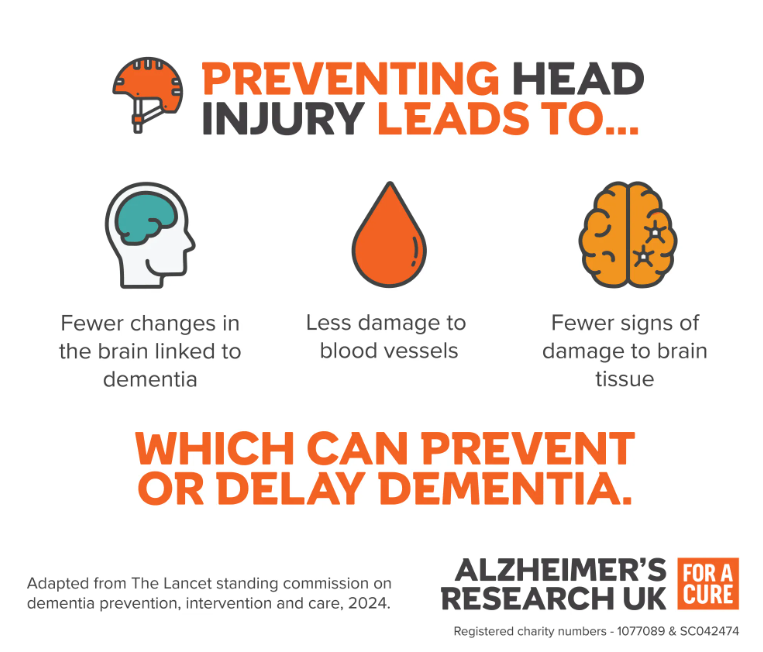
It’s not just elite sports players who need to think about brain health. Everyday head injuries — from falls, road accidents, or recreational activities — can also increase dementia risk if repeated or untreated.
Everyday Tips to Protect Your Brain:
Always wear a helmet when cycling, skateboarding, or using scooters
Use handrails and remove trip hazards at home to prevent falls
Avoid risky situations when under the influence of alcohol or medication
Drive safely and buckle up — car accidents are a major source of head injury
After any head injury, rest and monitor symptomsStudies show people with a history of traumatic brain injury (TBI) have a higher risk of developing dementia — even from single moderate-to-severe injuries.Studies show people with a history of traumatic brain injury (TBI) have a higher risk of developing dementia — even from single moderate-to-severe injuries.
Protecting your brain is a lifelong habit that starts with simple choices.
How to Reduce Risk in Contact Sports
Whether you’re on the pitch or the playground, these key steps can reduce risk:
✅ Limit head impacts, especially in young players (e.g. no headers in junior football)
✅ Wear proper protective gear
✅ Educate coaches, athletes, and parents about concussion signs
✅ Allow full recovery time before returning to play
✅ Encourage a culture of safety, not just toughness
Brain Health Booklet
Want to learn more about looking after your brain health? For more information steps you can take, and for local information and support in making these lifestyle changes you can access the Brain Health booklet in English and Welsh through our website.
You’re Not Alone
Remember, you are not alone. If you have concerns about your memory, care for someone with dementia or are looking for additional information and advice the Dementia Hwb is here for you. Visit our Swansea or Aberafan Dementia Hwb or pop down to one of our Mobile Hwb’s near you. Can’t make it in person? You can call our Swansea Hwb on 01792 304519 and our Neath Port Talbot Hwb on 01639 374356 or email on Support@DementiaFriendlySwansea.org and one of our team will respond by the next working day.
Article by Kayleigh Phillips